
Last week I took several ESOL groups to the local Botanic Gardens. At the end of the visit, one of the students told me it was the best trip ever. I agreed — and it made me reflect on what actually creates a successful, memorable ESOL outing.
Here are the ingredients that seemed to make this one work so well:
A keen, enthusiastic group
We had a great turnout, and every student was genuinely excited for the trip. I make the effort to ensure it’s a great trip no matter the number of learners but I’m sure that the energy of the group made a huge difference.
Good weather
Sunny weather isn’t essential, but it certainly helped. It made the walk more enjoyable and kept spirits high. Very difficult to ensure this, at least in Glasgow! Best to choose a venue which has good indoor options (we have two glasshouses for this visit).
Natural learning opportunities everywhere
The gardens gave us a wide range of plants, flowers and environments to explore. I elicited new vocabulary at every chance — cactus, Venus fly trap, squirrel and more. At each level, I have the option to grade for the level, e.g. ‘flower’ at pre-entry but ‘grow’ at pre-intermediate. Trips like this create authentic, meaningful language moments. One of my pre-intermediate learners walked round with a notebook and pen to note down new words. What a student!
Embracing the unexpected
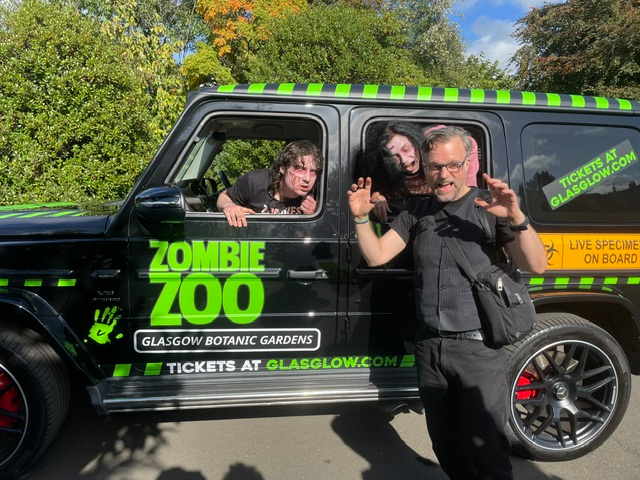
Some of the best learning came from unplanned moments. We chatted to a local who was feeding squirrels. He interacted with the learners and suggested we accompany him to visit a wee waterfall nearby — something I hadn’t included in the plan. We also spotted zombies. (Not real ones — no students were harmed!) These surprises add fun and real‑world English.
Variety
This single outing included a glasshouse tour, squirrel‑feeding, a visit to the remains of the disused railway station… and zombies of course! One of the students had never heard of this concept but we reassured her that she was in safe hands!
Post‑trip review back in class
After returning, we revisited the vocabulary. I sent my pre-intermediate group a crossword for homework (see below – you can generate these online, e.g. go to armoredpenguin.com) and we’re going to check the answers in our next class. With my pre‑entry group, we used the Language Experience Approach to generate a shared text and practise reading and writing. I’m going to add a blog soon on the exact process I use for this. The pre-entry Teacher’s Book discusses this approach in detail and offers suggestions. The updated version will be available next week.
Comment below
What would you add to this list? And what are your favourite venues for ESOL trips?

5 thoughts on “What are the key ingredients for a great ESOL class trip?”
Great idea!! We have taken students to Black Country Museum in Dudley and recently to Wightwick Manor National Trust venue which were able to travel to by bus which was a good experience for students to travel independently to an external venue without family.
Students love the opportunity to learn about new places to visit and it motivates them to return again with their families or friends.
Hi Bela, they sound like great trips! You’ve made a great point here about students finding out about places they can return to. I’ve had many learners comment that they have taken friends / family back to a place we’ve visited on a trip.
Sounds like a cracking day, Dave! The week / hour before going somewhere, we often pre-teach some vocabulary that we know will be relevant to a trip. Do you think there is merit in this or does it take away from the ‘spontaneous learning’ element?
Hi Giles, It was indeed a great afternoon out! That’s a great question and I’m curious about what you and others think? When telling the pre-entry students about the trip, that inevitably involves quite a lot of pre-teaching. I’m wondering if I should do more of this, thinking of the weaker students who would then benefit from the consolidation during the trip. As you say, you don’t want to lose too much of the spontaneity and it’s just a lot easier as a teacher to take advantage of using the surroundings to teach new words. What do you think?
We had a trip to the charity shops with a pre entry class. The aim of the trip was to encourage them to volunteer. There was lots of planning about bus times and what we would do. The shop staff were great and showed us the volunteering opportunities. Finished off with a cafe visit. And consolidated back in class. One student then volunteered all summer. It was great, although we didn’t see any zombies…